Water Heater Replacement Costs: What a Complete Installation Quote Includes
Compare the exact equipment, required site work, disposal, permits, warranties and operating-cost assumptions in a professional replacement quote.
On this page
- Describe the existing system and the problem to solve
- Separate equipment from installation requirements
- Compare a complete installed total
- Keep operating costs separate from the installation bill
- Verify the installer and written terms
- Agree on the handover before installation starts
- Common questions
- Sources and references
A replacement water heater’s shelf price is only one part of the project. A complete quote also needs to explain how the unit will be brought in, connected, checked and supported, what happens to the old equipment and which site conditions could add work. Comparing two equipment prices without those details can hide a substantial difference in scope.
This guide is for US homeowners comparing professional installation proposals. It is not a plumbing, gas or electrical installation manual. The contractor must assess the site, manufacturer requirements and applicable local rules. All dollar amounts below are fictional examples, not typical prices, bids or forecasts of energy savings.
Describe the existing system and the problem to solve
Before requesting quotes, collect the existing unit’s model information, fuel type, location and available service records if you can do so safely. Describe the practical problem: failure, insufficient hot water, a planned change in household demand or a desire to compare operating costs. Avoid diagnosing the equipment yourself from a price article.
Ask each contractor whether repair remains an appropriate option and what supports the replacement recommendation. If replacement is proposed, distinguish a similar unit in the same location from a different technology, fuel or location. Those projects can require different assessments and should not be treated as identical merely because each provides hot water.
Record your household’s demand pattern rather than guessing a size from the number on an advertisement. Simultaneous uses, changes in occupancy and the existing system’s performance give the contractor useful context. Ask how the proposed capacity and output were selected and whether the written quote describes the exact model being recommended.
Define the project in four layers
- Need: the hot-water problem and household use.
- Equipment: exact model, technology and capacity.
- Site work: connections, access and required changes.
- Completion: testing, paperwork, disposal and support.
Ask for a price against this whole scope.
Separate equipment from installation requirements
ENERGY STAR’s heat-pump water-heater guidance recommends planning ahead, discussing capacity and having a contractor assess the site. It also recommends written estimates and checking whether the installer handles necessary permits. This is guidance for evaluating a heat-pump option, not a statement that it suits every existing location.
For any proposed system, ask the contractor to list work on water connections, the energy supply, access and other site requirements. Mark each item as included, excluded or subject to inspection. Do not use a generic checklist to instruct a contractor to add equipment that may not be required; use it to obtain an explanation of the actual design.
If changing technologies, request a clear description of the conversion work. For a heat-pump option, ENERGY STAR’s installation considerations identify air circulation, space, location and condensate drainage as issues for the installer to assess against manufacturer specifications. Avoid substituting a general website dimension for the selected model’s requirements.
| Quote section | Information to request | Comparison issue |
|---|---|---|
| Equipment | Exact model, type, capacity and warranty | Similar names can describe different products |
| Site work | Required connection and access changes | Excluded work can change the total |
| Local requirements | Who handles permits and inspections if applicable? | Responsibility and fees must be clear |
| Removal | Old unit removal and disposal | Ask whether access difficulties add charges |
| Completion | Commissioning, user instructions and documents | The project should have a defined handover |
Compare a complete installed total
Suppose fictional Quote A lists $1,200 for equipment, $800 for installation, $150 for disposal and $100 for a stated permit allowance. Its listed total is $2,250. Quote B lists $2,050 installed but excludes a documented $250 of required work and $100 of disposal. Under those assumptions, B totals $2,400.
The comparison difference is $150, not the $200 suggested by comparing the initial headline totals. This example assumes the listed scopes can be matched; it does not establish that every quote needs those items or that a particular allowance will be sufficient. Confirm taxes and any other applicable charges before treating a total as final.
Keep allowances distinct from fixed prices. Ask what happens if the actual permit or site-work cost differs, who approves the change and whether an unused allowance is credited. If a contractor cannot assess something until the old unit is removed, request the decision process and possible charge structure rather than accepting an unexplained open-ended line.
Keep operating costs separate from the installation bill
The FTC explains that EnergyGuide operating costs are estimates based on typical use and national average energy prices. Actual costs depend on use and local prices. Use the label to help compare relevant models, then ask which assumptions differ from your household and utility rates.
A contractor’s projected annual saving is a separate estimate from the installed price. Request the baseline equipment, energy rates, expected use and included maintenance assumptions. If the proposal changes fuel type, compare the relevant costs on both sides rather than assuming the same bill category will simply fall by the quoted amount.
For example, an additional fictional upfront cost of $900 divided by an assumed $150 annual saving produces a simple six-year payback. If that saving were $75, the result would be twelve years. Neither calculation includes financing, repairs, changing energy prices or the value of money over time. The comparison is sensitive to an assumption, not proof of an outcome.
Three cost views answer different questions
- Upfront: what must be paid to complete the installation?
- Ongoing: what energy and maintenance costs are estimated?
- Uncertain: which site conditions or future costs remain unresolved?
Keep each visible instead of blending a projected saving into today’s invoice.
Verify the installer and written terms
The FTC’s home-improvement guidance recommends checking contractors, obtaining written estimates and understanding the contract. Ask about the qualifications and insurance relevant to your location and project. A familiar brand on the equipment does not establish the installer’s credentials or the completeness of the work.
Clarify the payment schedule, start date, expected disruption and completion criteria. Ask who coordinates other trades if needed and who is responsible for inspections. Keep equipment warranty terms separate from the installer’s labor warranty. Identify who to contact if the unit fails, a connection problem appears or the system does not perform as agreed.
If financing or an incentive is mentioned, request the separate terms and verify current eligibility before counting it as a saving. Do not deduct a rebate from the amount you must initially pay unless the quote explicitly explains how it is applied. This guide does not promise a currently available tax credit or a particular application outcome.
Agree on the handover before installation starts
Ask the installer to specify the final checks, operating instructions and documents you will receive. Keep the model and serial number, invoice, warranty, maintenance guidance and any applicable inspection record together. Ask how to arrange professional service when needed; the installation quote should not leave the support process unclear.
Use the home project budget tool to separate known charges and allowances, the monthly budget planner for payment timing, and our methodology page for how examples are labelled. A good comparison ends with a complete scope, accountable installer and understandable assumptions, not simply the lowest equipment price.
Common questions
Is the store price the full replacement cost?
Not necessarily. The equipment price may exclude installation, site changes, removal and applicable fees. Ask for a written installed scope for the exact model and location. Compare complete professional estimates rather than adding an unverified generic labor allowance to a retail price.
Should I automatically buy the same tank size?
Do not assume the previous tank establishes the right replacement. Ask a qualified contractor to assess household demand, the proposed technology and site conditions. The estimate should identify the selected model and the basis for the recommendation, rather than relying only on a nominal capacity match.
Can a different technology need extra site work?
Yes, the location and technology can affect space, connections and other installation requirements. Have a qualified professional assess the actual site against manufacturer specifications. Include necessary changes in the written quote before comparing the new system with an apparently simpler replacement.
Are permits always included?
Do not assume they are. Ask which local approvals or inspections apply, who obtains them and whether their charges are included. Resolve uncertain requirements with the relevant authority. A general estimate checklist cannot determine the code or permit obligations for an individual property.
Is the EnergyGuide cost my future bill?
No. EnergyGuide uses standardized assumptions for comparison, while your use, energy tariff and installation conditions affect actual spending. Keep the label estimate separate from a guaranteed savings claim. If calculating payback, state your own assumptions and test how a change affects the result.
Are the example prices current market prices?
No. They are hypothetical totals used to demonstrate complete-scope comparisons. They do not establish a local installation rate or expected bill. Obtain current estimates for the exact equipment and site, then align inclusions, exclusions and any uncertain work before judging the difference.
Does a simple payback calculation guarantee savings?
No. Dividing an extra upfront cost by an assumed annual saving gives only a simplified comparison. The result changes if either input changes and may omit maintenance, finance or other costs. Show those limits and do not present the calculated years as a promised outcome.
Is equipment warranty the same as labor warranty?
No. Manufacturer equipment coverage and installer labor coverage may have different durations, exclusions and remedies. Read both documents and identify who arranges service. Ask about any charges that could remain yours even when a component is covered under a warranty.
Should I include an unconfirmed rebate?
Keep an incentive separate and label it uncertain until the relevant program confirms eligibility, timing and application conditions. Do not subtract an unverified amount from the contractor’s price as if it were already received. A gross-cost comparison remains useful while that question is unresolved.
Does this guide explain how to install a water heater?
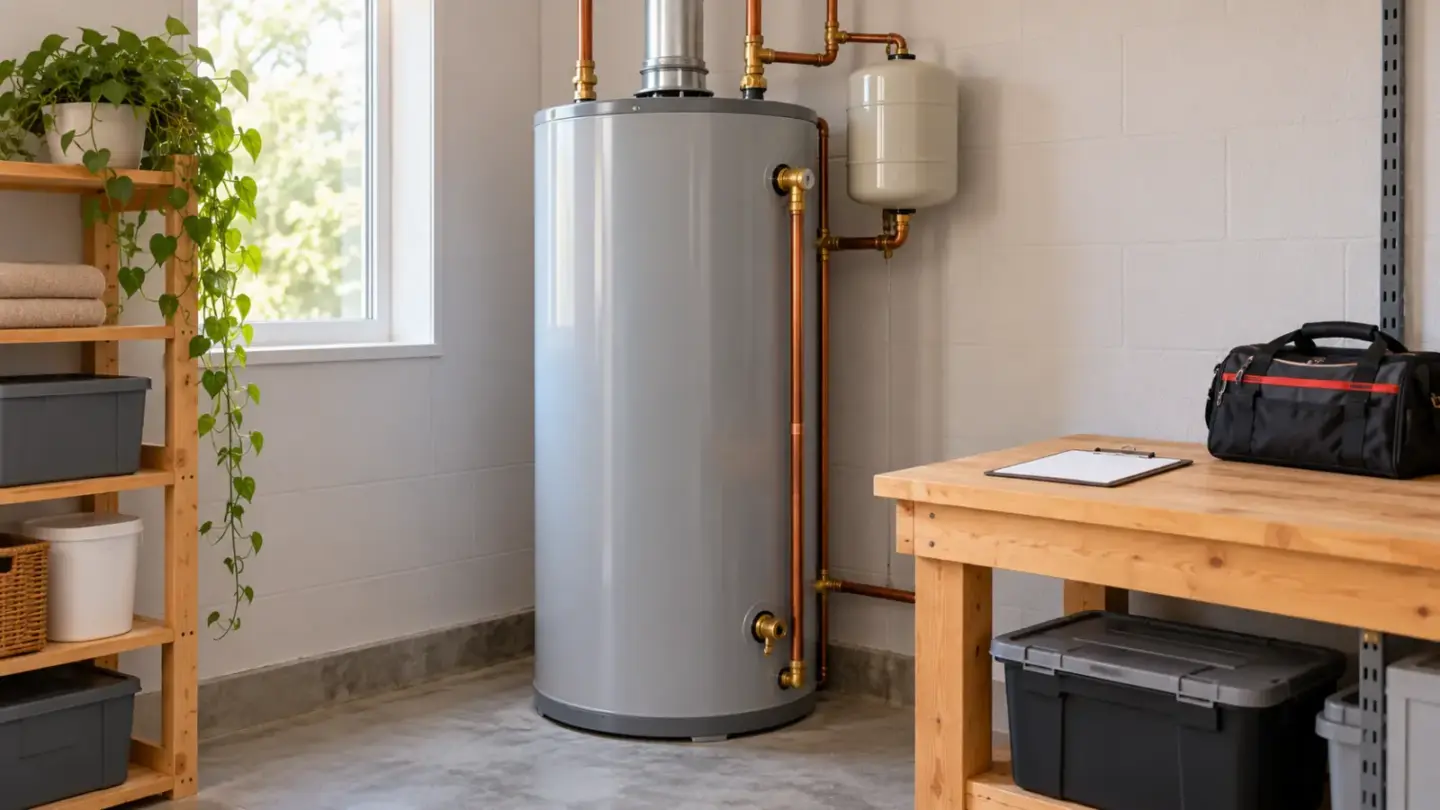
No. The guide helps compare professional quotes and operating-cost assumptions. Installation, sizing and safety work require the applicable manufacturer specifications and qualified assessment. It provides no electrical, gas, plumbing or venting instructions, and an illustration is not an installation diagram.
Sources and references
- ENERGY STAR: Heat Pump Water Heaters
- ENERGY STAR: Water-heater installation considerations
- FTC: Using the EnergyGuide label
- FTC: Avoiding home-improvement scams
Sources checked October 17, 2026. No property inspection or individual technical review is claimed.