Water Leak Warning Signs: What to Record Before Calling a Plumber
Record water leak warning signs, safe photographs, timelines and comparable water-use information before arranging a plumbing assessment.
On this page
- Describe the sign without naming an unconfirmed cause
- Build a simple timeline
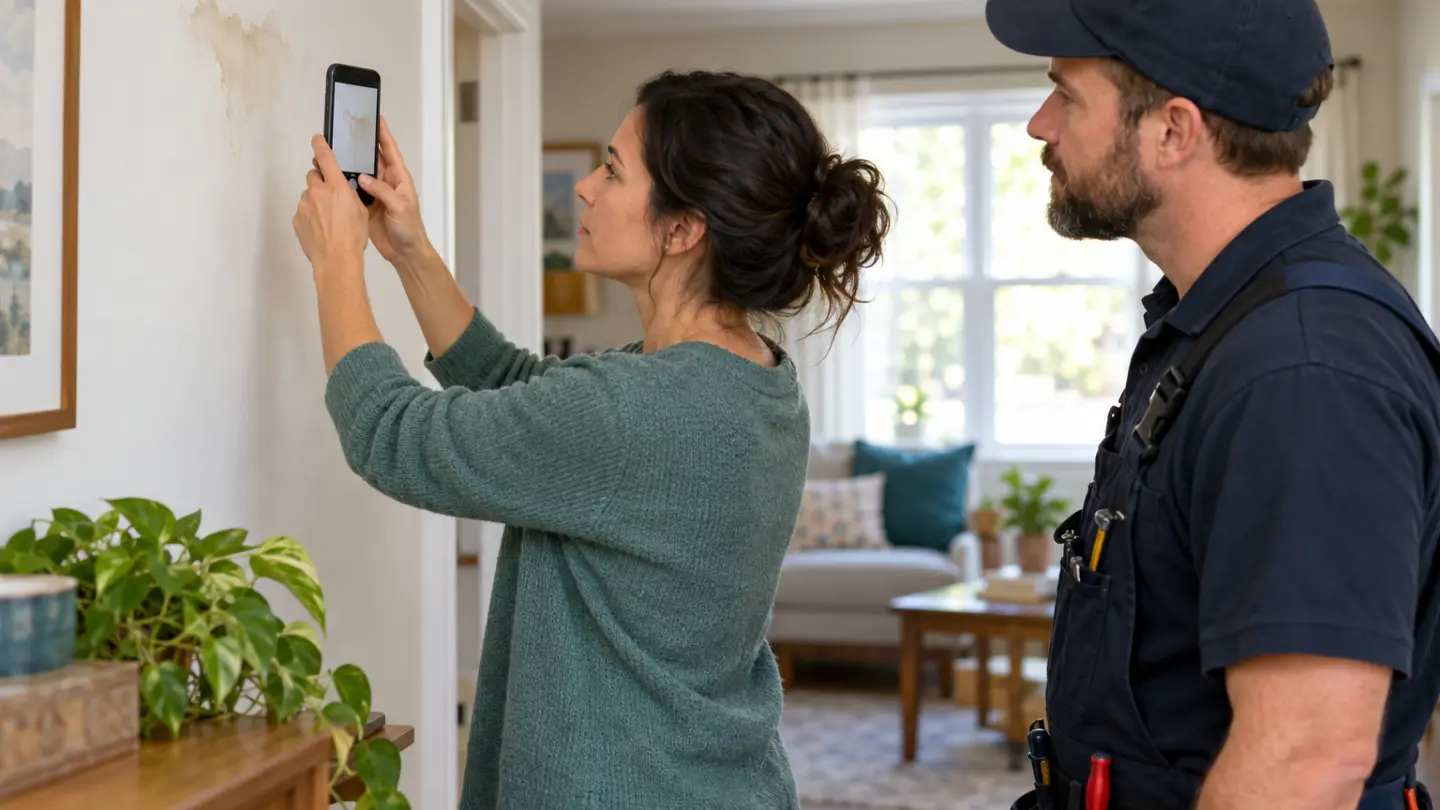
- Take useful photographs from a safe position
- Compare water use on a consistent basis
- Record meter or sensor information carefully
- Confirm who should arrange the assessment
- Keep follow-up separate from cosmetic work
- Prepare the information in six steps
- Common questions
- Sources and references
A damp patch, unexplained water use or a recurring drip gives a plumber useful information, but it does not identify the cause by itself. A short, factual record can help the right person assess the problem and plan the visit. The aim is to document what you can safely observe, not to dismantle the home to prove a diagnosis.
This guide covers routine information gathering and cost preparation. If water creates an immediate electrical, structural or other danger, keep away and contact the appropriate emergency or qualified service. Do not delay urgent help to complete a checklist, take photographs or collect a second meter reading.
Describe the sign without naming an unconfirmed cause
Write down exactly what you noticed: a patch on a wall, a drip beneath a visible connection, a running-water sound or a change in the bill. Include the location and when it first appeared. “Damp patch below the upstairs bathroom” is more useful than confidently labelling it a burst pipe when that has not been established.
Thames Water’s guidance on property leaks identifies signs such as damp patches, low pressure and higher metered bills. These are prompts to investigate, not proof of one fault. Its responsibility and repair rules apply to its own service context and should not be treated as worldwide requirements.
Distinguish what is happening now from a mark left by an older incident. Note whether the area appears to be changing, whether a drip is continuous or intermittent and whether a previous repair is relevant. Avoid touching damaged surfaces or entering unsafe areas just to make the description more detailed.
Build a simple timeline
Record the date and approximate time of the first observation, then any later change. Note relevant events you actually know about, such as an appliance being used or recent work in the area. A relationship in time may help the professional ask better questions, but it does not establish that the event caused the problem.
For example, a fictional record might say: “Tuesday evening: small mark noticed near utility-room ceiling. Wednesday morning: photograph taken from doorway. Wednesday afternoon: mark appears larger; property manager contacted.” That is a useful sequence without asserting what is behind the ceiling or how it should be repaired.
If several people use the home, ask them to add factual observations to the same record. Separate different reports instead of merging them into a more certain story. A note that one person heard water overnight and another did not can still help the plumber understand an intermittent issue.
| Record | Useful detail | Avoid |
|---|---|---|
| Location | Room, wall or visible fixture | Assuming the hidden source |
| Timing | First noticed and subsequent changes | Inventing an exact start time |
| Images | Safe overview and relevant closer view | Entering dangerous areas for a photograph |
| Water use | Bill periods, readings and household changes | Treating higher cost alone as proof of a leak |
| Earlier work | Known repairs and available invoices | Blaming a contractor without evidence |
| Contact history | Who was notified and what they advised | Losing the agreed next action |
Take useful photographs from a safe position
A wider photograph can show where the sign sits within the room, while a closer image can show the visible mark or connection. Keep the original images and their dates. If you take another image later, use a similar viewpoint where practical so changes are easier to understand.
Do not remove covers, open electrical fittings, climb onto a roof or disturb a ceiling to improve the picture. The record is incomplete by design when further access would be unsafe or require specialist skills. Tell the plumber what cannot be seen rather than turning a routine evidence task into exploratory repair work.
Share only the images needed for assessment. Check whether photographs include personal documents, screens or people unnecessarily. Use the contractor’s or property manager’s normal communication route, and keep a copy with your own record so the description and photographs stay together.
Compare water use on a consistent basis
The EPA’s WaterSense maintenance guidance recommends watching water use and comparing relevant bills. Start with the consumption figure, units and billing period, not only the amount charged. A tariff change or a longer billing period can increase the bill without demonstrating a new leak.
Suppose an invented bill records 18 cubic metres over 90 days. That is 0.20 cubic metres per day. A later bill records 24 cubic metres over 120 days, also 0.20 per day. The larger total reflects the longer period under these assumptions, so comparing 24 with 18 alone would be misleading.
If another 90-day period records 27 cubic metres, the daily figure is 0.30. That is a 50% increase from 0.20. It warrants checking the circumstances, but the arithmetic cannot tell you whether the cause is a leak, changed occupancy, outdoor use or a different recording basis. Note known changes alongside the figures.
Normalise the period before interpreting a bill
Example one: 18 m³ ÷ 90 days = 0.20 m³ per day.
Example two: 24 m³ ÷ 120 days = 0.20 m³ per day.
Meaning: different billed totals can represent the same daily use. These invented numbers are not leak thresholds.
Record meter or sensor information carefully
If a meter is safely accessible, record the displayed units, reading and time using the utility’s instructions. Note whether the reading is actual or estimated on the bill. Do not open unsafe access points or interfere with equipment; a utility or qualified professional can explain what information is suitable to obtain.
The EPA’s leak detection and flow monitoring guidance distinguishes moisture detection from monitoring water flow. An alert can provide useful timing or location information, but the device type matters. Save the alert and relevant settings rather than describing every notification as a confirmed diagnosis.
Tell the plumber about known water use during any observation period, including automatic appliances or irrigation if relevant. A reading can be difficult to interpret without that context. Do not reset or change a monitoring system simply to make an alert disappear before the issue has been assessed.
Confirm who should arrange the assessment
In a rented or managed property, notify the responsible landlord or manager through the appropriate process. For possible supply-network issues, contact the local utility. The boundary between private plumbing and utility infrastructure varies, so ask the relevant organisation rather than applying another region’s rules to your home.
When contacting a plumber, provide the location, timeline, photographs and any useful consumption record. Explain access restrictions and whether someone must arrange entry. Ask whether the first appointment is for diagnosis, repair or both, and whether any additional specialist investigation may need a separate quotation.
Our contractor estimate checklist helps distinguish an inspection charge from a repair quote. Record call-out fees, minimum charges and what the appointment includes. Do not approve an undefined repair scope merely because you have already paid for an initial visit.
Keep follow-up separate from cosmetic work
The EPA’s mould and moisture guide emphasises dealing with the moisture problem. Covering a stain does not by itself establish that the cause has been resolved. Ask the appropriate professional what follow-up is needed before arranging decorative work affected by the incident.
After the visit, record the assessed cause, work completed and any outstanding action in the professional’s own terms. Keep the invoice and relevant photographs. If the sign recurs, this history is more useful than remembering only that “the leak was fixed” without knowing what was actually repaired.
A useful record follows the whole problem
Before: observations, dates, safe images and relevant readings.
During: assessment scope, agreed work and any limitations.
After: completed repair, follow-up advice and any recurrence.
Prepare the information in six steps
- Decide whether immediate professional help is needed.
- Describe the visible sign and location without guessing the cause.
- Record a timeline and take safe, relevant photographs.
- Collect comparable bills, readings or alerts where available.
- Notify the responsible person and clarify the assessment scope.
- Save the outcome and any follow-up instructions.
Add appropriate follow-up to your home maintenance calendar. Use the home project budget tool for confirmed assessment and repair costs, keeping uncertain work visibly separate. The record supports a professional decision; it does not need to become a complete diagnosis before you make the call.
Common questions
Does a damp patch prove there is a plumbing leak?
No. It is an observation that needs assessment, and there can be different causes. Record its location, timing and changes without naming an unconfirmed fault. Provide the information to the appropriate professional, and avoid opening or disturbing building materials simply to prove a theory before arranging help.
Should I finish the checklist before calling someone?
Not if there is an immediate danger or a rapidly developing problem. Keep away from unsafe areas and contact the appropriate emergency or qualified service. The checklist is for useful routine preparation; it should never delay urgent help or encourage you to approach water near electrical or damaged structural components.
What photographs are most useful?
A safe overview helps show the location, while a relevant closer image can document the visible sign. Keep dates and use similar viewpoints for later comparisons where practical. Do not climb, remove covers or enter unsafe spaces for a better image; explain any visibility limitation to the person assessing the problem.
Does a higher water bill mean I have a leak?
It can be a reason to investigate, but cost alone is not proof. Compare consumption, units, period length and whether readings are estimated. Note changes in household use and tariffs. A larger total across a longer period may represent the same daily consumption, as the guide’s invented example illustrates.
Can a sensor identify the exact repair needed?
An alert may indicate unexpected moisture or a change in flow, depending on the device. It does not necessarily identify the underlying fault or repair scope. Save the alert, timing and relevant settings, and share them with the professional rather than treating the notification as a complete diagnosis.
Should I read the meter myself?
Only obtain information that is safely accessible and consistent with the utility’s instructions. Record units and timing and note known water use during the period. Do not interfere with equipment or enter unsafe access areas; contact the utility or qualified professional if the reading cannot be obtained safely.
Who is responsible if I rent the property?
Notify the landlord or property manager promptly through the agreed process and check the applicable tenancy arrangements. Responsibilities and utility boundaries vary by location and circumstances. Do not assume another water company’s published rules apply to your home or approve specialist work without clarifying who should arrange it.
What should I ask about the first visit’s price?
Ask whether the fee covers attendance, diagnosis, a limited repair or some combination, and whether there are minimum or additional charges. Clarify what happens if further investigation is needed. An initial assessment price is not automatically a fixed quotation for every repair that might be identified during the visit.
Should I repaint a stain as soon as it looks dry?
Ask the appropriate professional what follow-up is needed and whether the cause has been addressed. Cosmetic improvement does not establish that moisture will not recur. Keep decorative work separate from the assessment and repair record so an appearance change does not replace confirmation of what has actually been resolved.
What records should I keep after the repair?
Retain the assessment, agreed scope, invoice, relevant photographs and follow-up instructions. Record any recurrence and the date it appears. A clear history of what was found and repaired helps the next conversation more than a general note that a plumber attended without identifying the work or remaining limitations.